
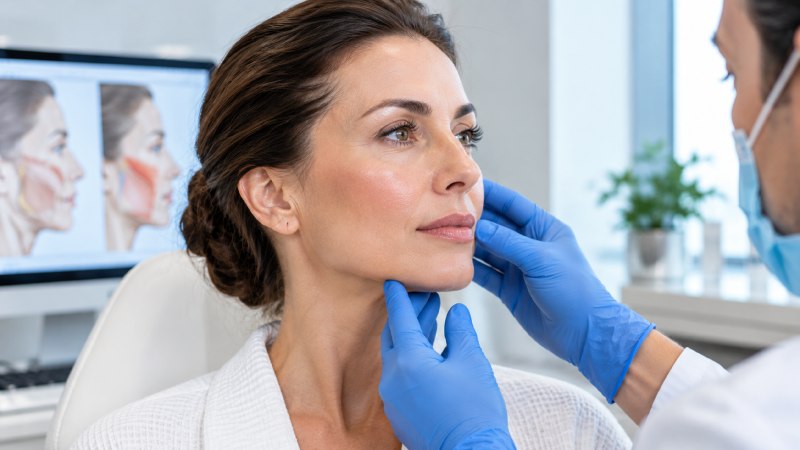
“Deep plane” has become one of the most searched phrases in facial surgery, and that popularity creates a problem for you. The term describes a specific surgical approach, but it is not a protected label. Two clinics can use the same words for operations that differ in where the surgeon works, what is released and how the lift is achieved.
That matters whether you are booking locally or researching deep plane facelift Turkey options. This guide explains what the technique involves, what the evidence says about its safety, how recovery fits around travel and which questions reveal what a surgeon actually plans to do.
Where the Deep Plane Actually Is
Your face is built in layers. Under the skin sits a layer of fat, then a sheet of connective tissue and muscle called the SMAS (superficial musculoaponeurotic system). Beneath the SMAS lies the deep plane, close to branches of the facial nerve and a series of retaining ligaments that anchor the soft tissues to bone.
Older facelifts pulled mainly on the skin, which could create a tight, windswept look that did not last. Most modern facelifts work on the SMAS in some way: folding and stitching it, removing a strip of it, or lifting it as a separate flap.
The deep plane technique, first described by surgeon Sam Hamra in 1990, goes a step further. The surgeon works beneath the SMAS, releases key retaining ligaments in the cheek and jaw area, and moves skin and SMAS together as one unit. Because the deeper layer carries the tension, the skin can be redraped without being pulled tight. Supporters argue that this gives more natural movement in the midface and jawline and a result that holds up well over time.
What the Evidence Says About Safety
For years, the main worry about working in the deep plane was the facial nerve, because its branches run close to this layer. Recent research is reassuring, with some caveats.
A systematic review and meta-analysis published in Aesthetic Plastic Surgery in 2026 pooled 45 studies covering 10,784 deep plane facelift patients. The overall complication rate was 6.6%. Temporary facial nerve weakness occurred in an estimated 1.2% of patients, haematoma in 1.8%, seroma in 1.7% and infection in 0.8%, and no permanent facial nerve injuries were observed. The authors judged the technique safe and effective, while calling for more randomised studies and longer follow-up.
A separate 2025 meta-analysis comparing deep and SMAS techniques across 47 studies found similar nerve injury rates, most of them temporary, with haematoma in 3% of deep technique facelifts and 2% of SMAS facelifts.
Two sensible conclusions follow. First, in experienced hands, the deep plane approach does not appear to carry a dramatically higher risk than other modern techniques. Second, those figures come largely from surgeons who publish their results and perform the operation often. Your own risk depends on your surgeon’s record, which is why you should ask for it.
Haematoma: The Risk That Shapes Your Travel Plan
A haematoma is a collection of blood under the skin, and it is the most common complication after facelift surgery in general. Most develop within the first 24 hours. Published studies link a higher risk to male sex and raised blood pressure, and careful blood pressure control around the time of surgery has been shown to reduce it.
For you, this has three practical consequences:
- Tell your surgeon everything about your blood pressure, blood-thinning medicines, supplements, alcohol intake and smoking.
- Expect a clear protocol for the first night, including how your blood pressure, pain and nausea will be managed.
- Avoid a tight itinerary. Staying close to your surgical team through the early recovery period means problems can be treated quickly, and your surgeon should decide when you are fit to fly.
If you are a man considering a facelift, raise the higher haematoma risk directly. A good surgeon will already have a plan for it.
Who Tends to Benefit, and Who May Not
A deep plane approach is often discussed for people with jowls, a softened jawline, deepening folds between the nose and mouth, and descent of the cheek tissue. It is frequently combined with a neck lift, because the neck and lower face tend to age together.
No facelift changes skin texture, fine lines or pigmentation, and none stops ageing. It resets your starting point. Your surgeon may suggest additional treatment, such as fat grafting or skin resurfacing, if volume loss or skin quality is part of your concern.
You may be advised to wait, or to choose a different approach, if you:
- Smoke or use nicotine and cannot stop for the period your surgeon requires, since nicotine reduces blood flow to healing skin
- Have high blood pressure that is not well controlled
- Take blood-thinning medication that cannot safely be paused
- Have only mild changes that a smaller procedure could address
- Hope the operation will fix something that surgery cannot change
Being told “not yet” is a sign of a careful surgeon, not a lost opportunity.
Recovery on a Travel Timeline
Everyone heals differently, but a typical pattern looks like this:
- First few days: swelling, tightness and bruising, often with a dressing or compression garment. You rest with your head raised.
- First one to two weeks: stitches are removed and bruising begins to fade. Many people feel comfortable in public, perhaps with light make-up, by around the second or third week.
- First three months: remaining swelling and numbness gradually settle, and the result becomes easier to judge.
- Six to twelve months: scars mature and the final contour becomes clear.
Plan your trip around your surgeon’s advice rather than a package template, and allow buffer days in case you need an extra check before flying. Build in time off work at home as well, especially if your job is public-facing.
Questions That Reveal What You Are Buying
Because the label is used loosely, ask questions that describe the operation rather than its name:
- In which layer will you work, and which retaining ligaments will you release?
- Will my neck be treated at the same time, and how?
- How many deep plane facelifts do you perform each year?
- What are your own rates of haematoma, nerve weakness and revision?
- What is your blood pressure protocol for the first 24 hours?
- Can I see results at twelve months or later, from patients with an age and anatomy similar to mine?
- How long should I stay before flying, and who follows me up at home?
Clear, specific answers suggest a surgeon who performs the technique regularly. Vague answers suggest the label may be doing more marketing work than surgical work.
Making Your Choice
Start with the anatomy of your own face, not the name of a technique. Ask a qualified facial or plastic surgeon to explain which layers need to move to address your concerns, and whether a deep plane approach is the right tool for that.
If you are weighing deep plane facelift Turkey offers against options closer to home, compare the same things everywhere: the surgeon’s specific experience, their complication data, their first-night protocol and a realistic recovery plan. For treatment in Turkey, also ask about the complication insurance that providers must now arrange for surgery on international patients, and what it covers. Turkey has experienced facial surgeons and well-equipped hospitals, and the best of them will welcome detailed questions.
Choose the surgeon who explains the operation most clearly, not the one who uses the most impressive words.
Medical disclaimer: This article is for general information only and does not replace personalised medical advice. Facelift surgery carries risks, and only a qualified surgeon who has examined you can advise whether it is suitable for you.