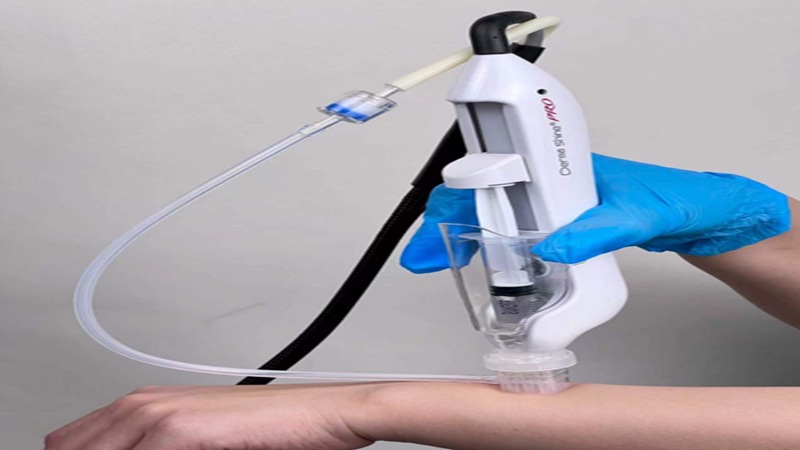
Introduction to the Mesotherapy Gun
The mesotherapy gun, also known as a mesogun, is a revolutionary device in the field of aesthetic medicine. Mesotherapy itself is a minimally invasive technique that involves injecting a cocktail of vitamins, minerals, amino acids, and other active substances into the middle layer of the skin (the mesoderm). Manufacturers designed the mesotherapy gun to facilitate this injection process, making it more efficient, precise, and less painful than traditional syringe-based injections.
The concept of mesotherapy dates back to the 1950s when French doctor Michel Pistor first developed it. Over time, as technology advanced, the mesotherapy gun was introduced to enhance the delivery of mesotherapy solutions. It operates on a simple yet effective principle. The gun uses a spring – loaded or pneumatic mechanism to deliver a series of micro – injections at a controlled depth and volume.
One of the key advantages of using a mesotherapy gun is its ability to cover a larger area in a shorter time. This is particularly useful when treating conditions such as cellulite reduction, skin rejuvenation over large body areas like the thighs or abdomen, or hair loss on the scalp. By delivering multiple injections rapidly, the mesotherapy gun significantly reduces overall treatment time, benefiting both patients and practitioners.
Components and Working Mechanism
The mesotherapy gun consists of several important components. The main body of the gun houses the injection mechanism, which can be either spring – powered or pneumatically driven. Spring – powered guns are generally more affordable and easier to maintain. They work by compressing a spring, which is then released to drive the injection needle into the skin. Pneumatic guns, on the other hand, use compressed air to generate the force needed for injection. These guns offer more precise control over the injection depth and volume, but they are often more expensive and require additional equipment such as an air compressor.
The needle system is another crucial part of the mesotherapy gun. The needles are usually very fine, ranging from 3mm to 6mm in length, which allows for accurate delivery of the mesotherapy solution into the mesoderm layer. The number of needles can vary; some guns have a single needle, while others may have multiple needles arranged in a cluster. Multiple – needle guns can cover a larger area with each injection, increasing the efficiency of the treatment.
The injection chamber holds the mesotherapy solution.Manufacturers designed it to be easily refillable, allowing practitioners to continue the treatment without interruptions. Some advanced models also have a built – in pressure regulator that ensures a consistent flow of the solution during injection.
When using a mesotherapy gun, the practitioner first loads the injection chamber with the appropriate mesotherapy solution. Then, they adjust settings such as the injection depth and volume according to the patient’s condition and the treatment area. The gun is then placed against the skin, and with a simple trigger mechanism, the injection process begins. The needles penetrate the skin, delivering small amounts of the solution at the desired depth.
Applications of the Mesotherapy Gun
Skin Rejuvenation: One of the most common applications of the mesotherapy gun is skin rejuvenation. The mesotherapy solutions used for this purpose often contain antioxidants, hyaluronic acid, and growth factors. These substances can stimulate collagen production, improve skin elasticity, and reduce the appearance of fine lines and wrinkles. The mesogun allows for even distribution of the solution across the treatment area, ensuring uniform results. For example, practitioners can use the mesotherapy gun to treat areas around the eyes, mouth, and forehead during facial skin rejuvenation, giving the skin a smoother, more youthful appearance.
Cellulite Reduction: Cellulite is a common cosmetic concern, especially among women. Mesotherapy guns can be used to target cellulite by injecting solutions that break down fat cells and improve blood circulation. The active ingredients in these solutions may include phosphatidylcholine, caffeine derivatives , and plant extracts . The gun can precisely deliver the solution into the subcutaneous layer where cellulite is located, helping to reduce its appearance over time. Treatment sessions typically involve multiple injections over a series of weeks or months.
Hair Loss Treatment: Hair loss affects millions of people worldwide , both men and women . Mesotherapeutic treatments using a mesotherapy gun can be an effective option for promoting hair growth. The injection solutions usually contain vitamins , minerals , and amino acids that nourish the hair follicles and stimulate new hair growth. By injecting these substances directly into the scalp, the gun can improve the delivery of nutrients to the hair follicles, increasing their vitality . This treatment is often used in combination with other hair loss therapies for better results.
Stretch Mark Treatment : Stretch marks occur when the skin stretches rapidly, such as during pregnancy or weight gain. Practitioners use mesotherapy guns to treat stretch marks by injecting substances that promote collagen and elastin production. They commonly use hyaluronic acid and growth factors in these solutions.The gun can deliver the solution into the affected areas, helping to improve the appearance of stretch marks by making them less visible and more supple.
Advantages and Disadvantages
Advantages
Firstly, the mestherapy gun offers increased precision. The ability to control the injection depth and volume allows practitioners to tailor the treatment to the specific needs of each patient. This is especially important in delicate areas such as the face or around sensitive organs. Secondly, it is more efficient. As mentioned earlier , it can cover larger areas quickly, reducing the overall treatment time compared to traditional syringe – based injections. Thirdly , the use of a mesotherapy gun can be less painful for patients. The fine needles and the controlled injection process minimize discomfort during the treatment. Additionally , the uniform distribution of the mesotherapy solution provided by the gun often leads to better and more consistent results.
Disadvantages
One major drawback is the cost. High – quality pneumatic mesotherapy guns can be quite expensive, which may be a barrier for some clinics or practitioners. Maintenance is also a concern. Spring – powered guns may require regular calibration to ensure accurate injection, and pneumatic guns need proper cleaning and maintenance of the air compressor system. There is also a risk of infection if the gun is not properly sterilized between uses. Another potential issue is that some patients may experience bruising or swelling at the injection sites , although this usually subsides within a few days.
In conclusion, the mesotherapy gun is a valuable tool in the field of aesthetic medicine. Despite its limitations , its advantages in terms of precision , efficiency, and patient comfort make it a popular choice for many practitioners. As technology continues to evolve, we can expect further improvements in design and functionality of mesotherapy guns, leading to even better treatment outcomes.